
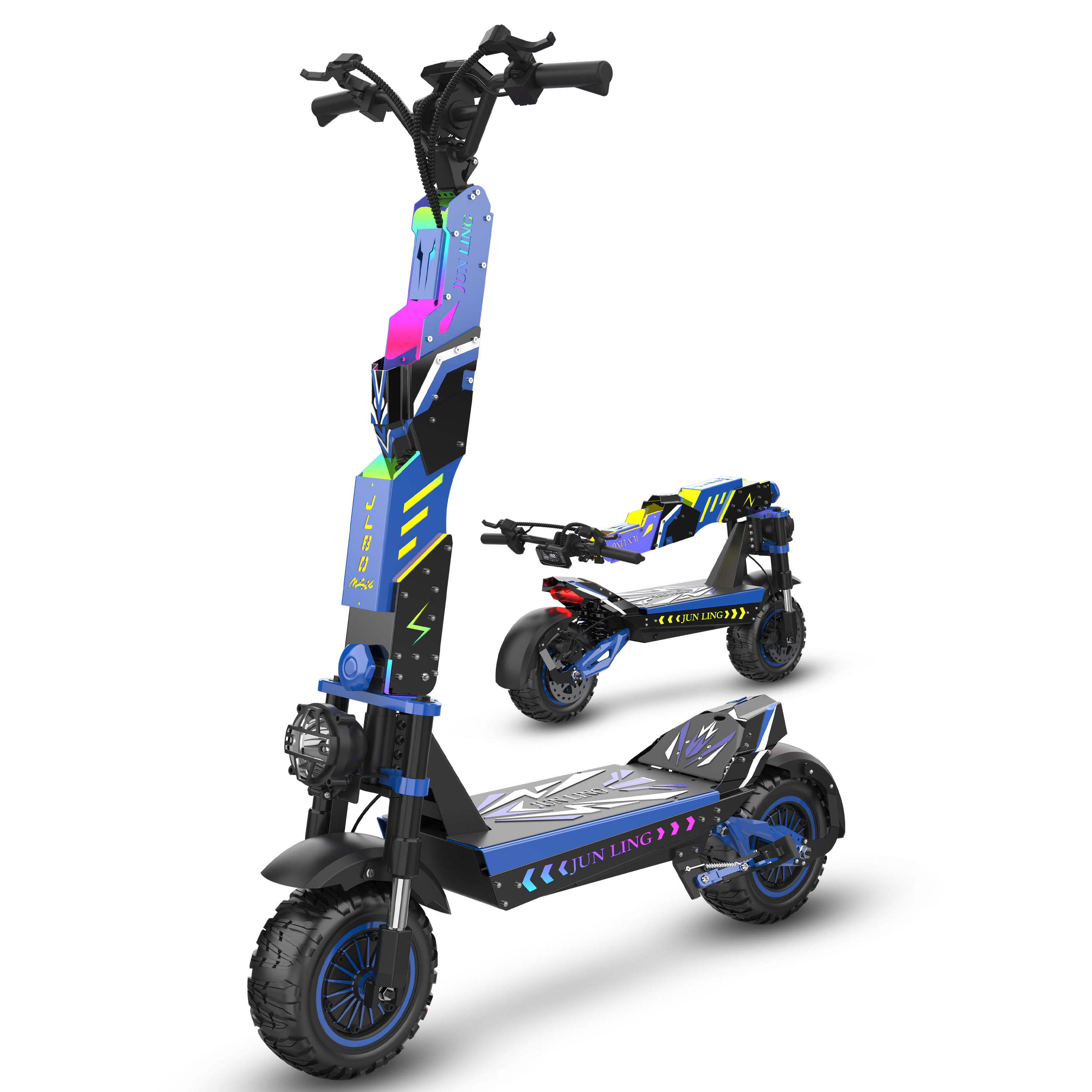
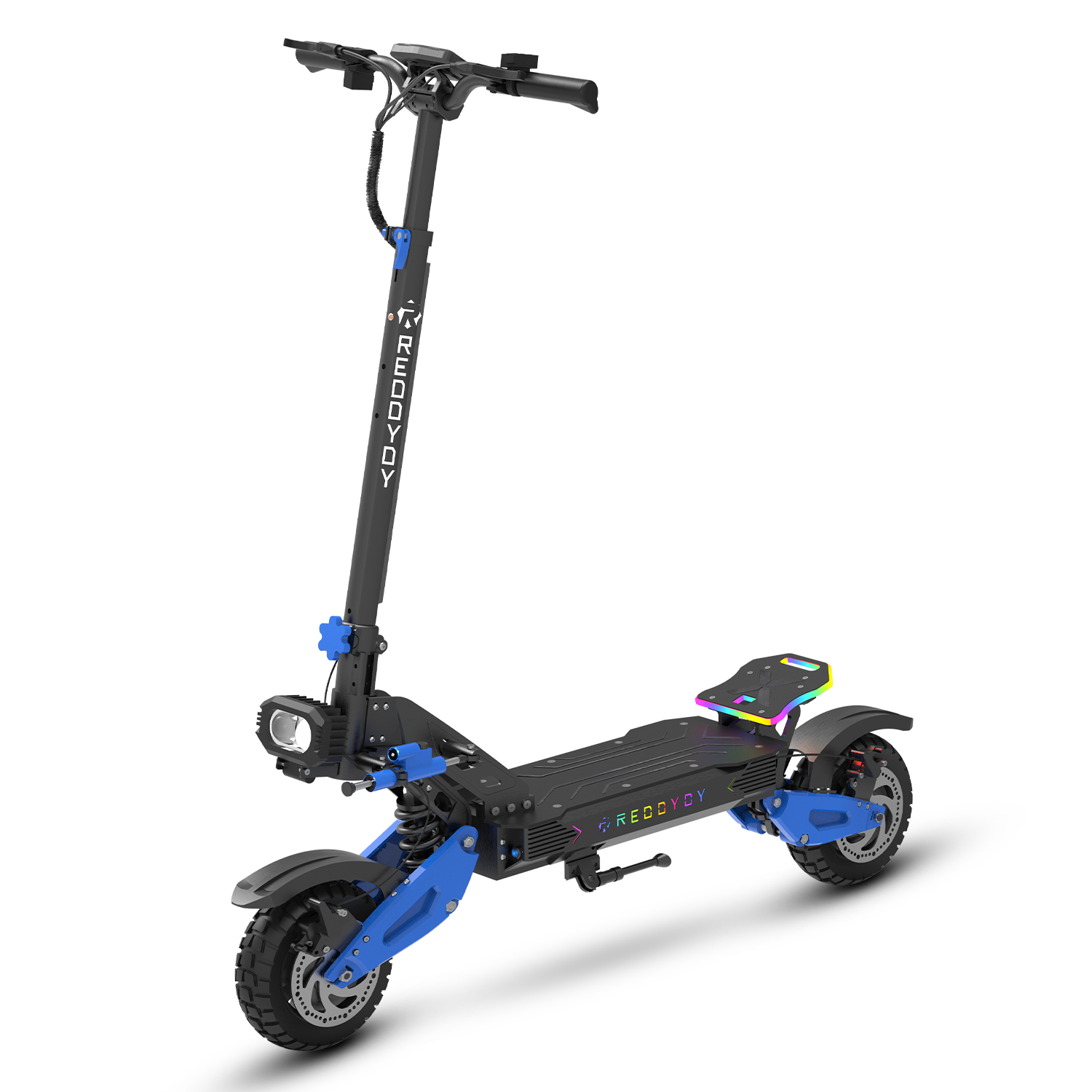
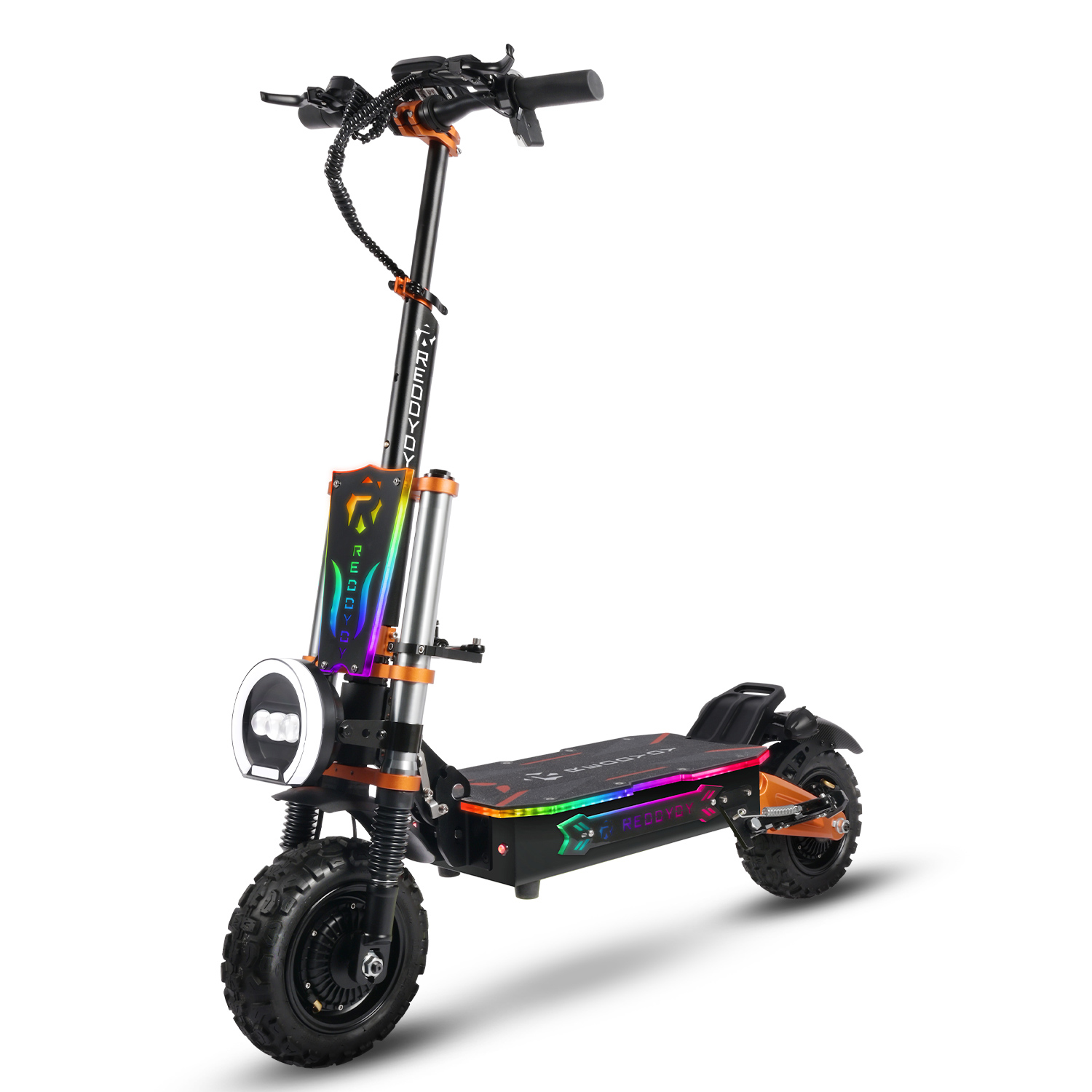
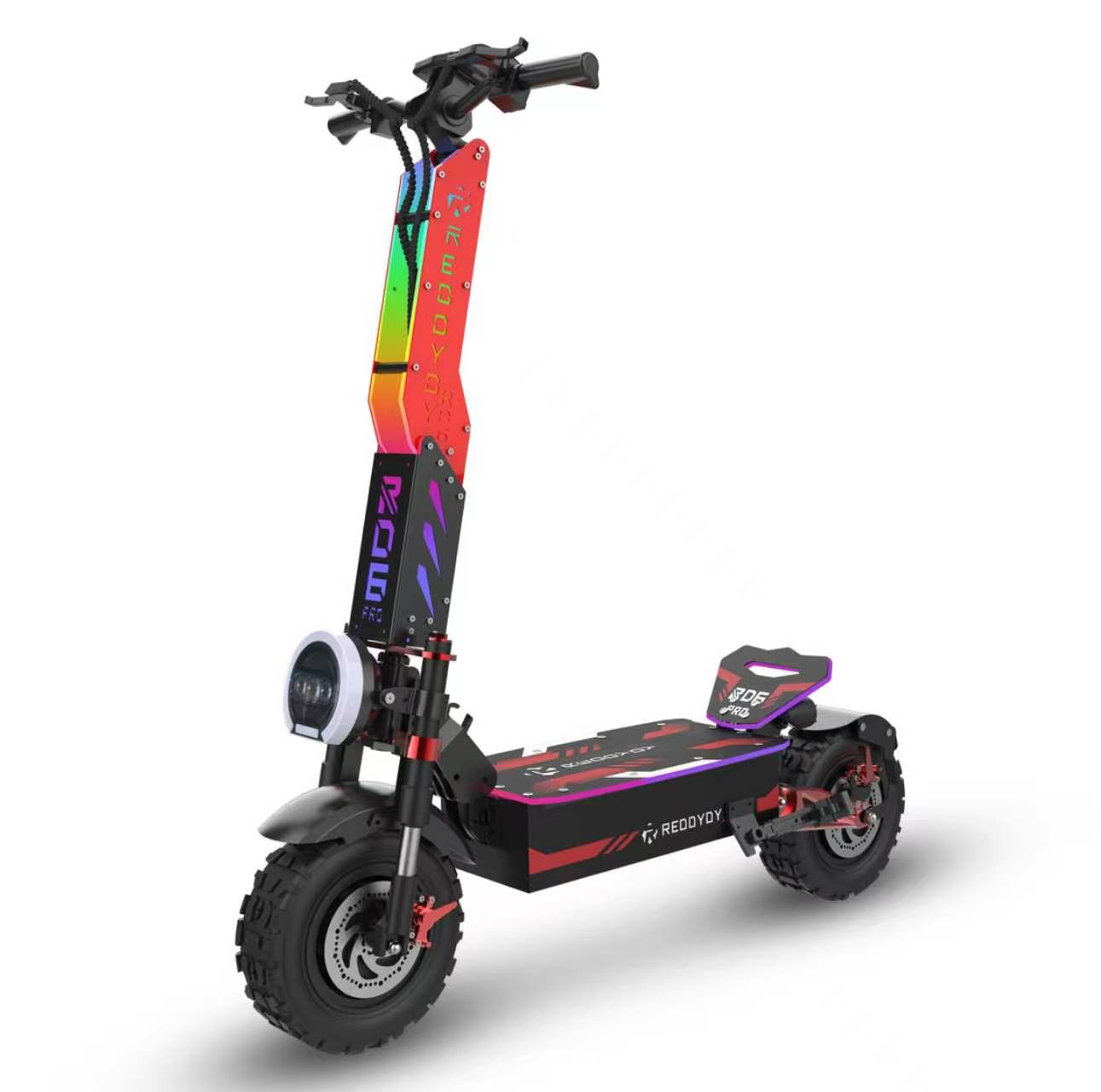
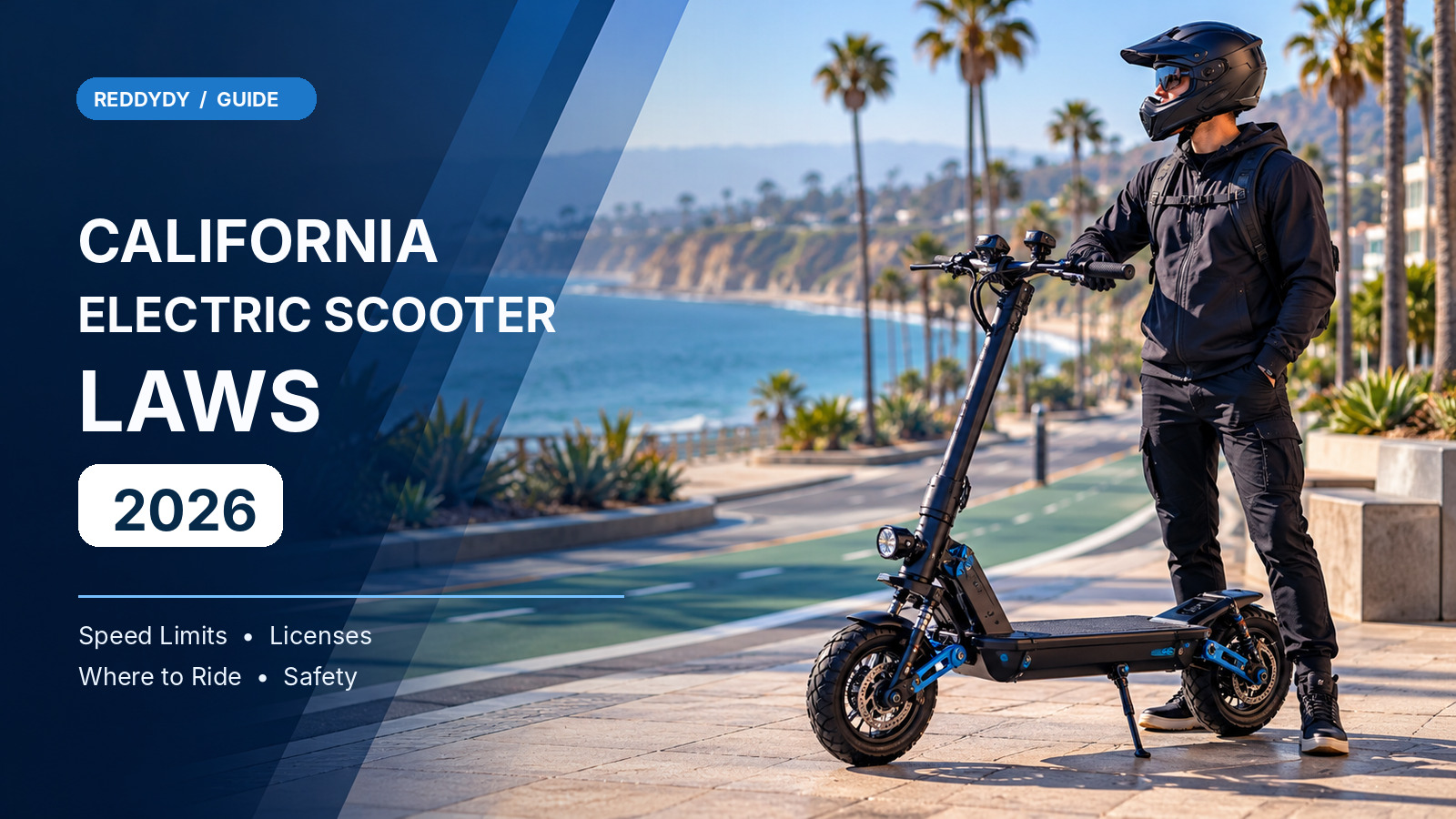
California has some of the country's most detailed rules for electric scooter riders. But there's an important distinction that many online guides miss: a scooter's advertised top speed is not the speed you're legally allowed to ride on public roads. And a high-performance scooter may require a closer look at its legal classification before you use it in public.
This 2026 guide explains the main California rules, where you can ride, which safety equipment matters, and what to consider if you own a powerful off-road model. Last reviewed: October 20, 2026. Laws and local ordinances can change; confirm current requirements with the relevant authorities before riding.
What counts as a motorized scooter in California?
California Vehicle Code section 407.5 describes a motorized scooter as a two-wheeled device with handlebars, powered by a motor, and designed with a standing floorboard (or certain alternative seat-and-footrest configurations). It is a specific legal vehicle category—not simply a marketing label used by every brand.
A standing electric scooter, a seated moped, an electric motorcycle, and an off-highway vehicle may be governed by different rules. Do not assume a product automatically qualifies for every motorized-scooter exemption just because its product title contains the words “electric scooter.” The California DMV's vehicle guide explains several of these categories.
What is the electric scooter speed limit in California?
15 mph is the maximum operating speed for a motorized scooter under California's public-road rules. The limit also applies while riding on applicable bikeways; it does not become higher just because the nearby road has a higher posted vehicle speed limit.
That legal limit is separate from the machine's technical capabilities. For example, a high-power model may be advertised as capable of 50 mph or more, but that specification does not authorize riding at that speed on a California street or public bikeway. Read the California Highway Patrol guidance and Vehicle Code section 21235 for the relevant rules.
Do you need a driver's license or permit?
Yes. California motorized-scooter operators need a valid driver's license or instruction permit. The DMV also states that riders must be at least 16 years old. A standard driver's license can satisfy the license requirement for a vehicle that truly falls within the California motorized-scooter category; separate requirements may apply to other vehicle classes.
If you are under 18, check the restrictions associated with your instruction permit in addition to scooter rules. Never treat access to a scooter, or the ability to purchase one, as proof that you are legally eligible to operate it.
Can you ride an electric scooter on the sidewalk?
Generally, no. California Vehicle Code section 21235 prohibits riding a motorized scooter on a sidewalk, except as necessary to enter or leave adjacent property. That narrow exception is not permission to use the sidewalk as a regular travel lane.
When pedestrians are nearby, slow down, give them room, and dismount where necessary. Some cities also impose additional restrictions on parking scooters in the pedestrian right-of-way.
Are electric scooters allowed on roads and bike lanes?
For vehicles that meet California's motorized-scooter definition, permitted locations depend on the roadway and local restrictions:
Bikeways and bicycle paths: operation may be allowed unless a rule, sign, or local authority prohibits it.
Roadways with a speed limit of 25 mph or less: motorized scooters may generally be operated subject to the applicable scooter rules.
Roadways posted above 25 mph: Vehicle Code section 21235 generally requires operation within a Class II or Class IV bikeway. Local authorities may authorize limited exceptions for certain roads posted up to 35 mph.
Where a Class II bicycle lane exists: Vehicle Code section 21229 generally directs scooter riders to use it, with specified exceptions for passing, turning, or avoiding hazards.
These are not blanket permissions for any high-powered recreational vehicle. Always check signs, local ordinances, and the legal status of the particular model and location. More detail: Vehicle Code section 21235 and section 21229.
Are helmets required for California electric scooter riders?
The text of Vehicle Code section 21235(c) specifically requires a properly fitted and fastened bicycle helmet for operators under 18. California agency guidance also strongly emphasizes helmet use, and some summaries describe helmet requirements more broadly. Because the guidance is not worded identically, riders should check current requirements and any local or vehicle-specific rules rather than rely on an oversimplified statement.
Our safety recommendation is simple: wear a well-fitting, properly fastened helmet every ride, regardless of age. For faster, higher-energy riding in areas where it is legal, select protective equipment appropriate for the risk, including eye protection, gloves, and abrasion-resistant clothing.
What lights and reflectors are needed after dark?
California Vehicle Code section 21223 specifies lighting and reflector requirements for motorized scooters operated on highways after dark. These include a forward-facing white light, rear red reflector, and side reflectors with defined visibility requirements. The law permits certain rider-mounted alternatives for the front lamp and rear reflector.
Inspect your light and reflector setup before a night ride. Decorative RGB lighting is not a substitute for required functional lighting. See Vehicle Code section 21223 for the exact rules.
Do motorized scooters need registration or insurance?
The California DMV says vehicles qualifying as motorized scooters do not require DMV registration. However, other classes of motorized vehicles may have registration, permit, or licensing requirements. Whether your insurance covers electric scooter use is also a separate question: ordinary auto or homeowner policies may not provide coverage for every incident or device.
Before riding—or buying a high-performance scooter—ask your insurer about liability and injury coverage and check the applicable vehicle classification.
What about 50–60 mph off-road electric scooters?
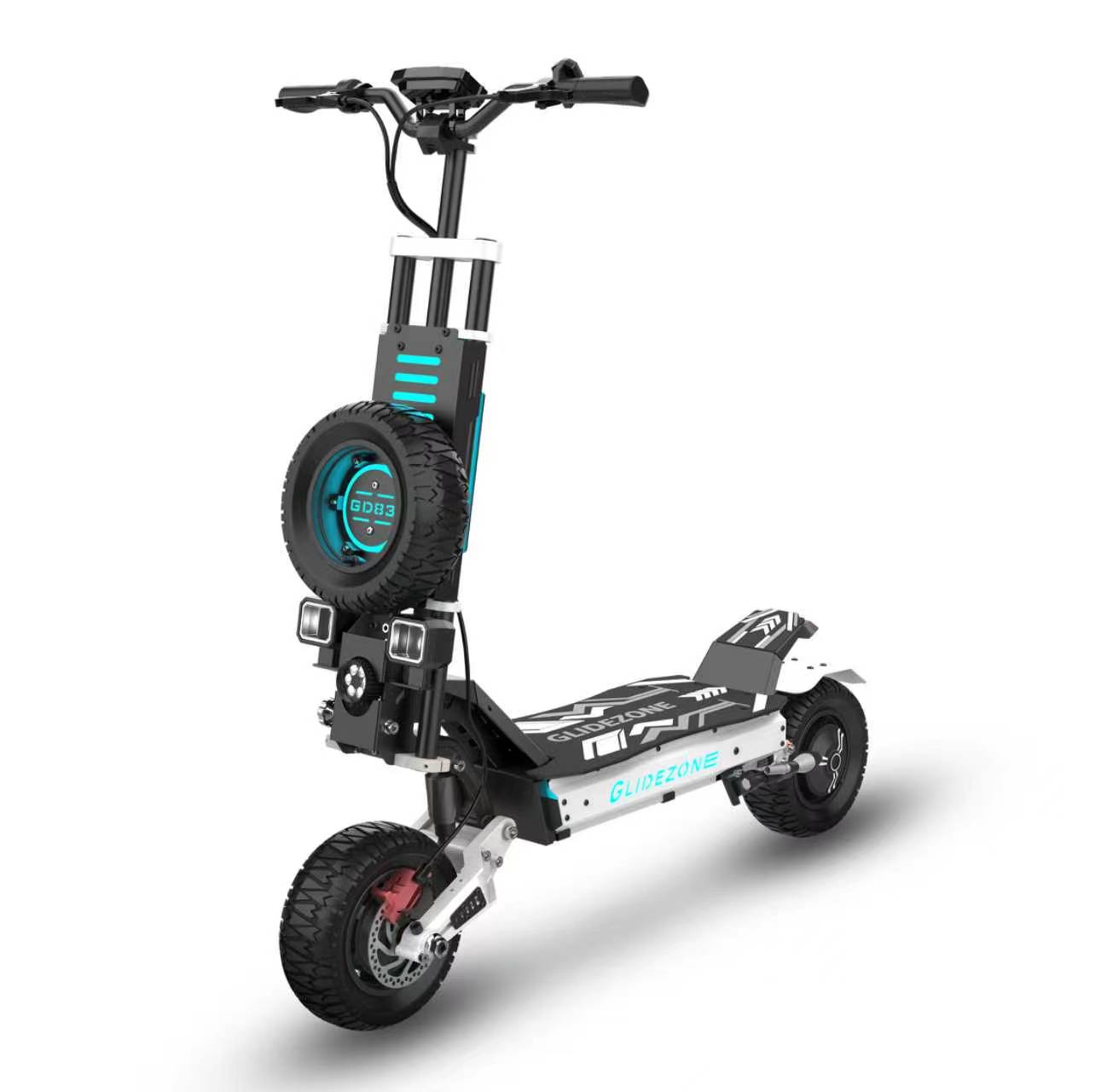
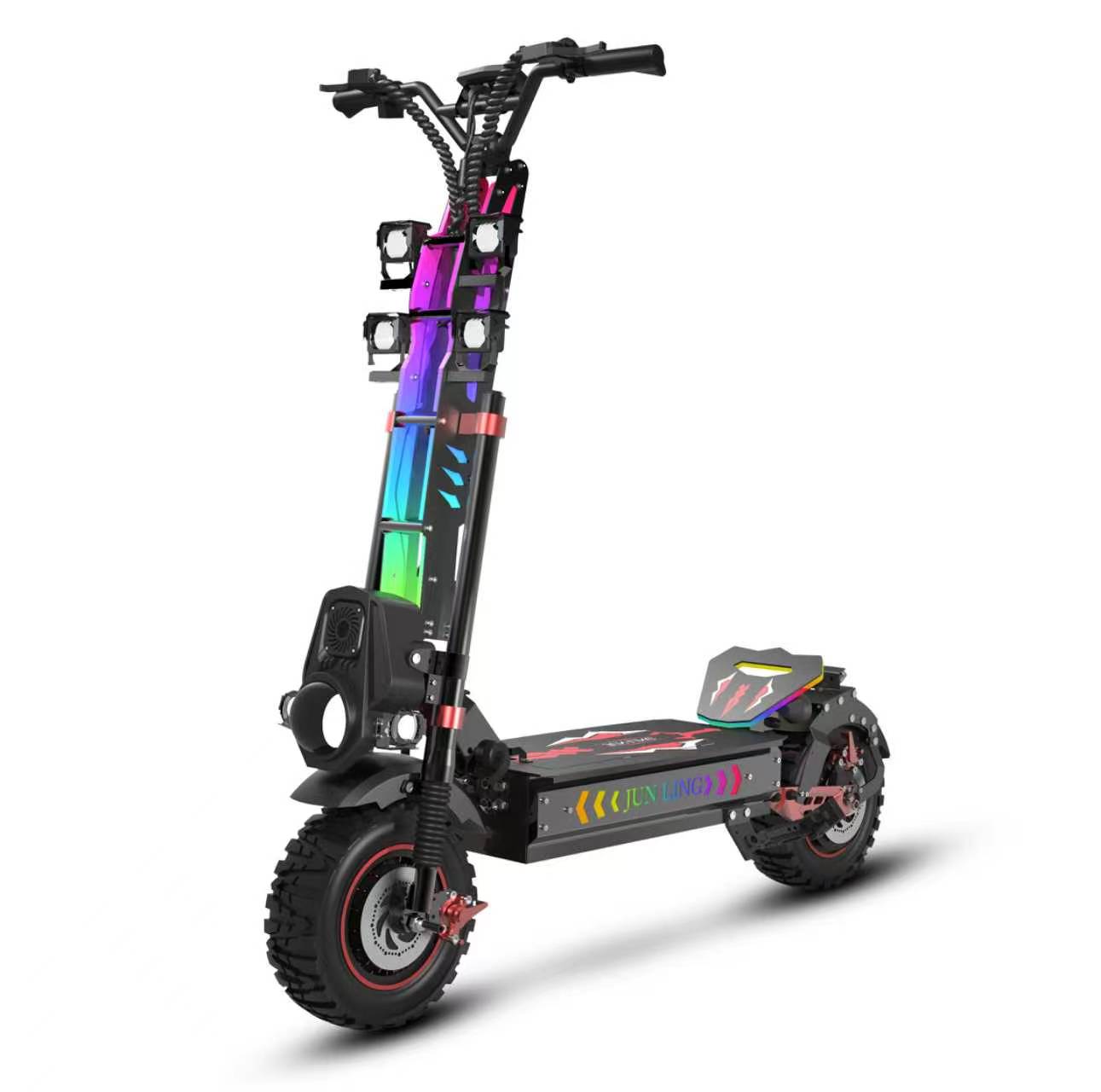
Models such as the REDDYDY RD2 and REDDYDY RD6 Pro are designed and marketed for high-performance riding, with manufacturer-listed top speeds far above California's ordinary motorized-scooter operating limit.
Their advertised performance does not make them street-legal in California. The correct legal treatment depends on the vehicle's specifications, equipment, classification, and where it will be used. Even lowering the speed setting does not, by itself, establish lawful use on a public street, sidewalk, park trail, or bike path.
If you are considering a high-power scooter, confirm both the vehicle's status and permission to ride at your intended location. Private land also requires the landowner's permission, and protected lands or managed riding areas can have their own rules.
Frequently asked questions
Can I ride an electric scooter at 30 mph in California?
Not under the 15 mph operating limit that applies to California motorized scooters on public roads and bikeways. Other vehicle categories have different rules; do not assume that a faster electric scooter is permitted on those routes.
Can tourists ride electric scooters in California?
Visitors must still meet licensing, age, and traffic-law requirements. Before riding, confirm whether your license or permit satisfies California law.
Are passengers allowed on an electric scooter?
California's motorized-scooter rules prohibit carrying an additional passenger. Follow the vehicle's intended single-rider configuration and manufacturer guidance.
Does wearing a helmet make a high-speed scooter street-legal?
No. A helmet is protective equipment, not a substitute for legal vehicle classification, required road equipment, or the applicable speed and location limits.
The bottom line
The essentials are easy to remember: know your scooter's legal category, respect the 15 mph motorized-scooter limit, have the appropriate license or permit, avoid sidewalks, use lawful riding areas, and wear protective equipment. High-performance scooter owners should do additional checks before any public-road use.
For safety guidance before every outing, read the U.S. Consumer Product Safety Commission's micromobility recommendations.
Disclaimer: This article is general information, not legal advice. The applicable law may vary based on vehicle classification, local ordinance, permitted riding area, and changes after the last review date.
Sources
California DMV — Motorcycles, Mopeds, and Scooters
California Highway Patrol — Motorcycles and Similar Vehicles
California Vehicle Code §21235
California Vehicle Code §21229
California Vehicle Code §21223