
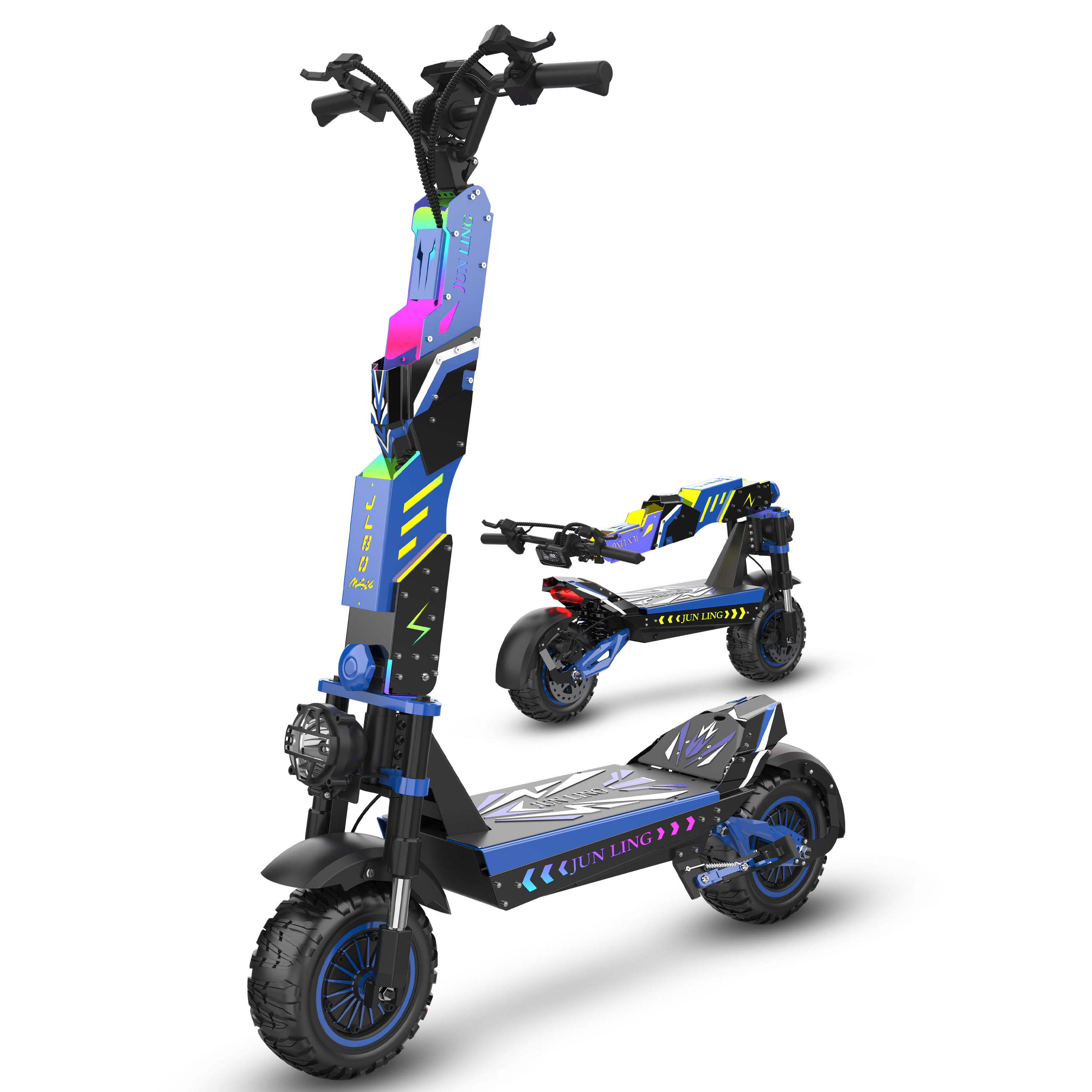
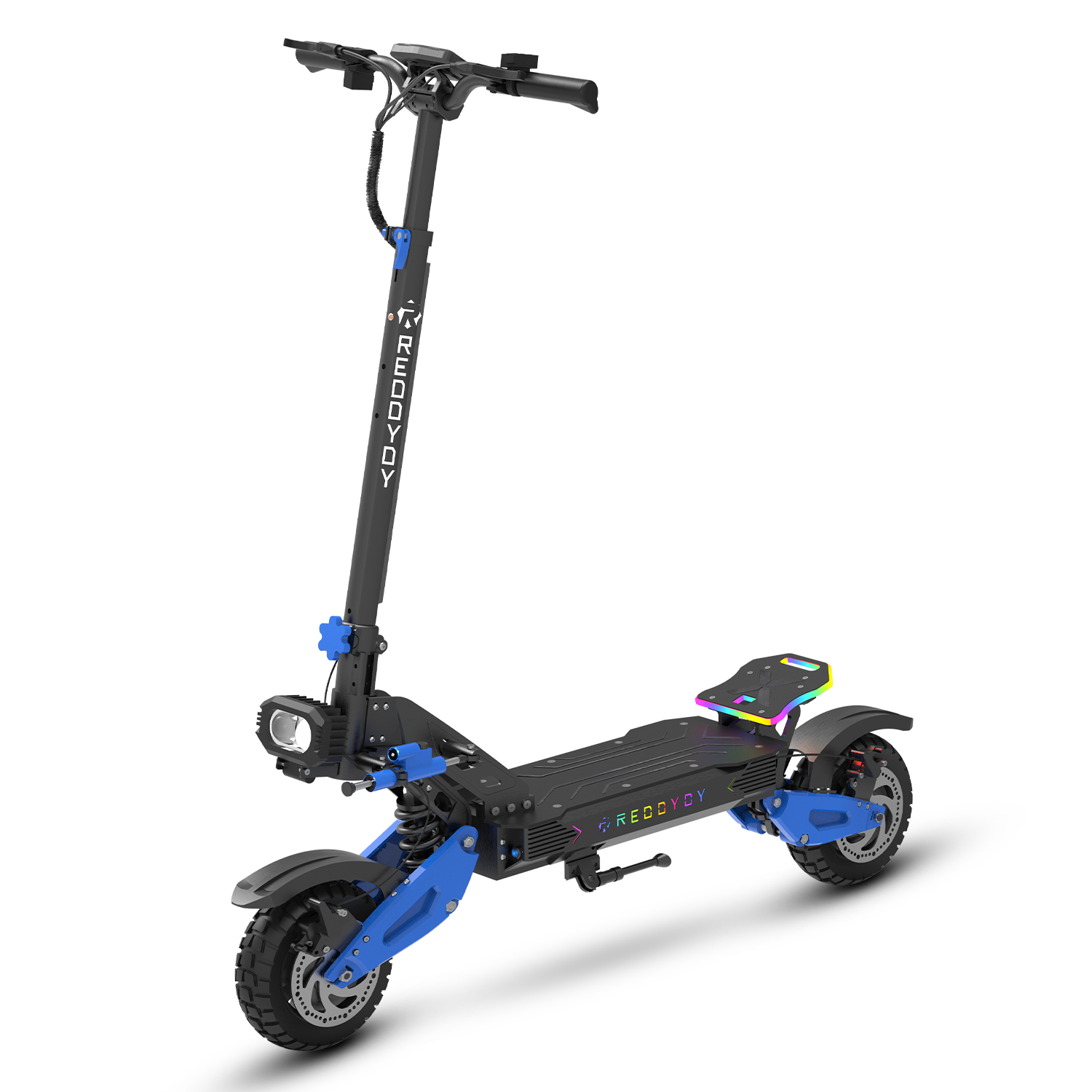
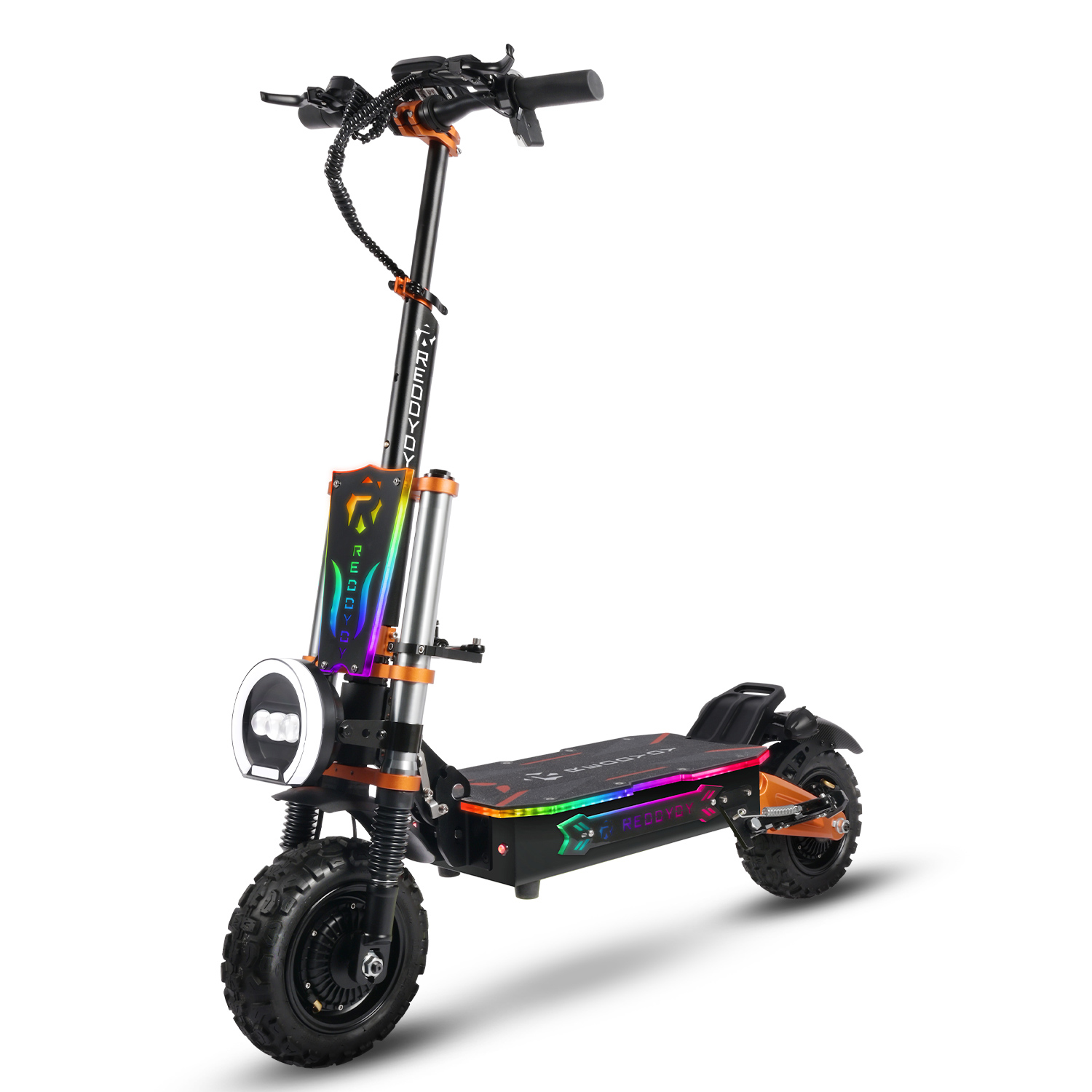
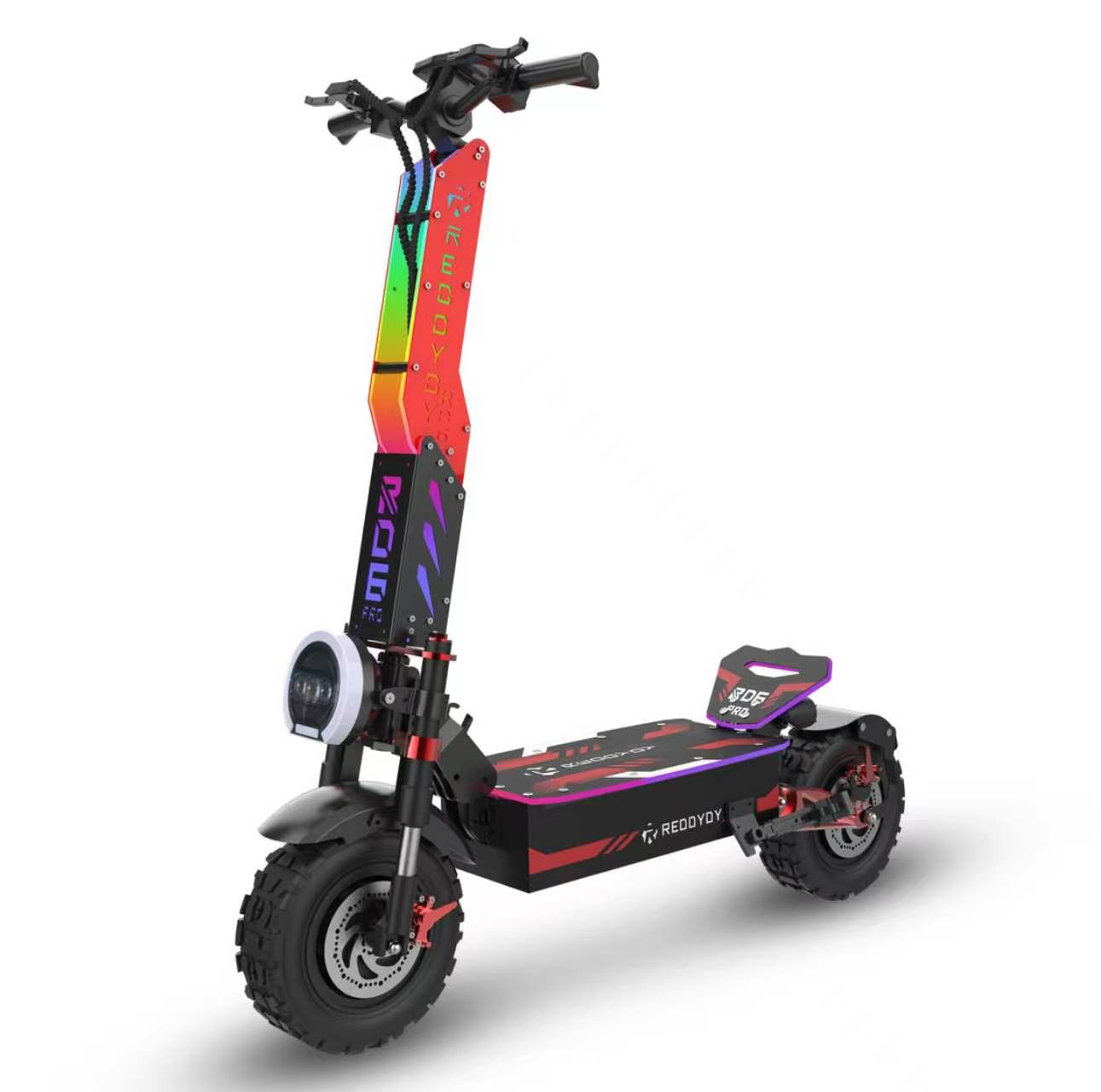
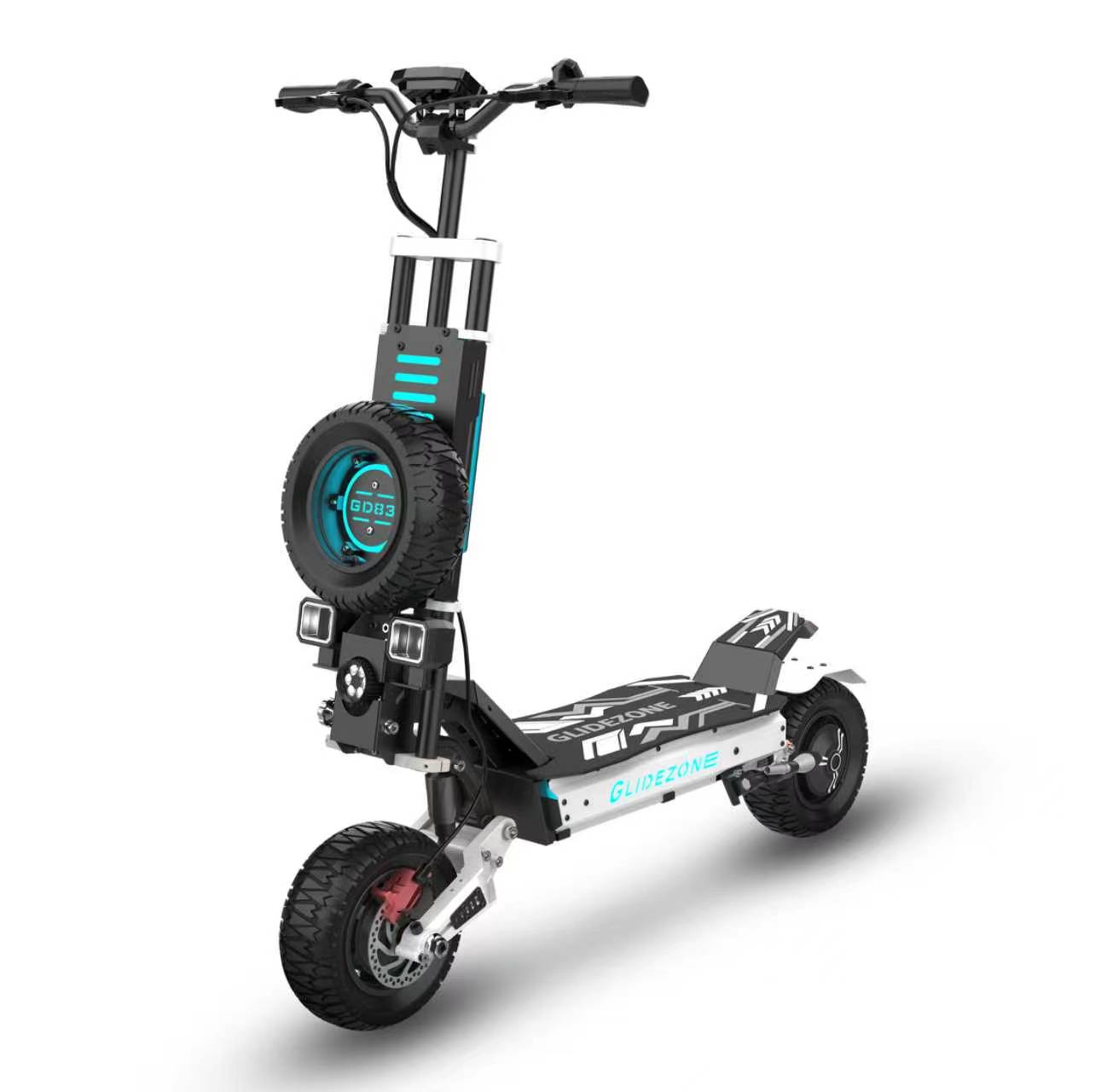
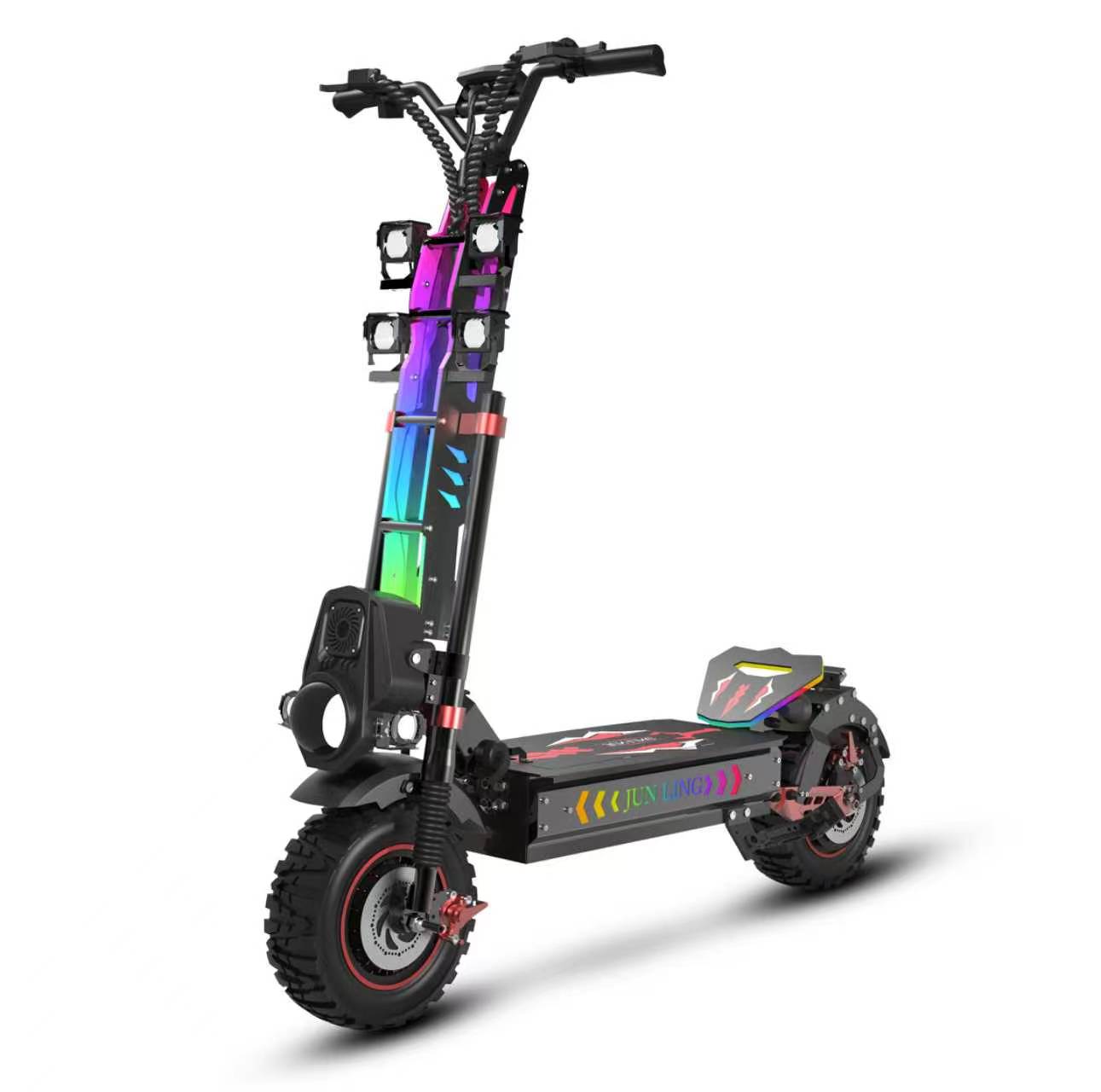
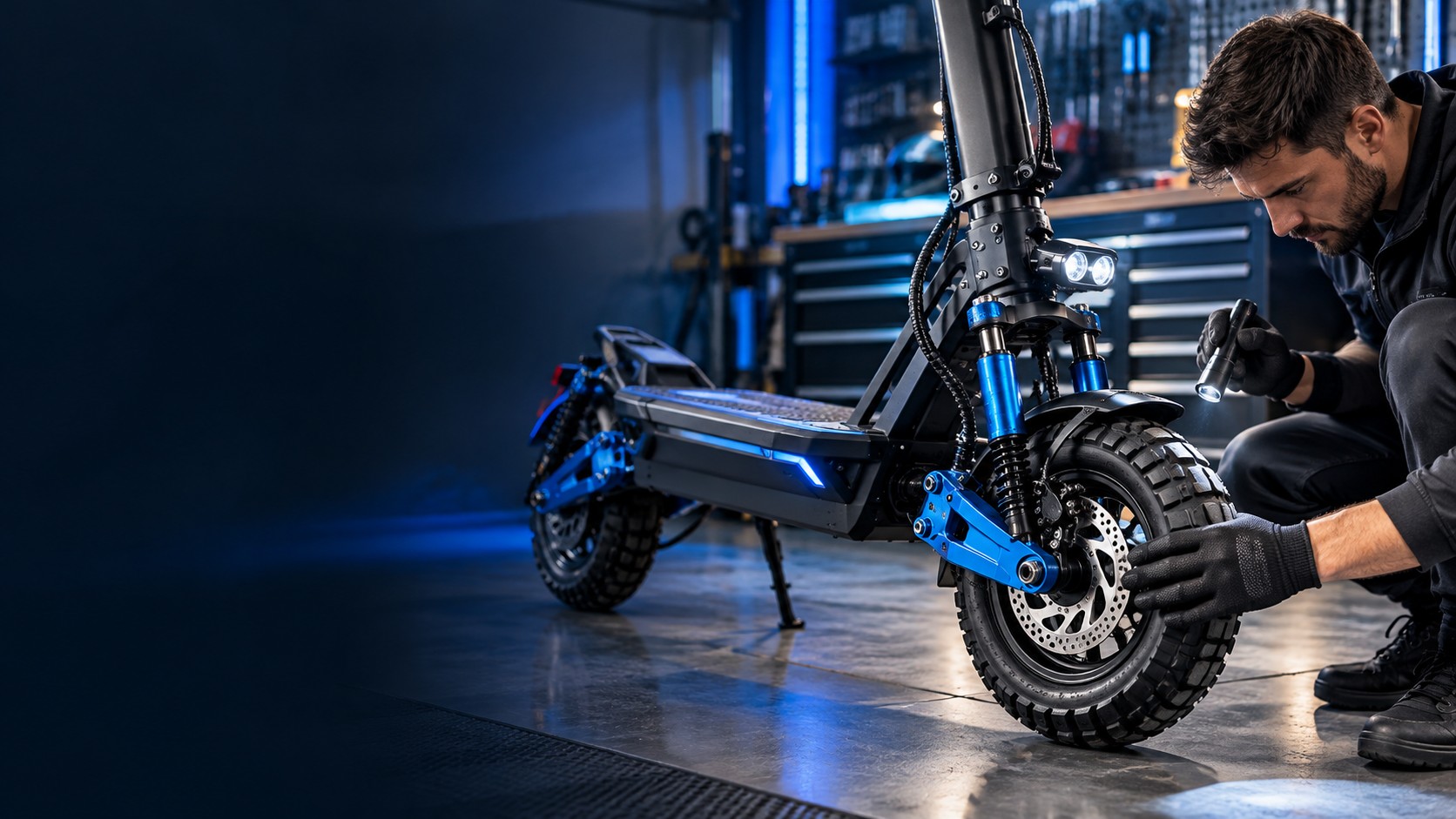
Before every ride, take a few minutes to inspect your electric scooter. A quick safety check can help you spot worn parts, loose hardware, and control problems before they become serious.
Start with the scooter switched off on level ground. If anything looks damaged or works unexpectedly, do not ride until the problem has been properly checked.
The 10-point inspection checklist
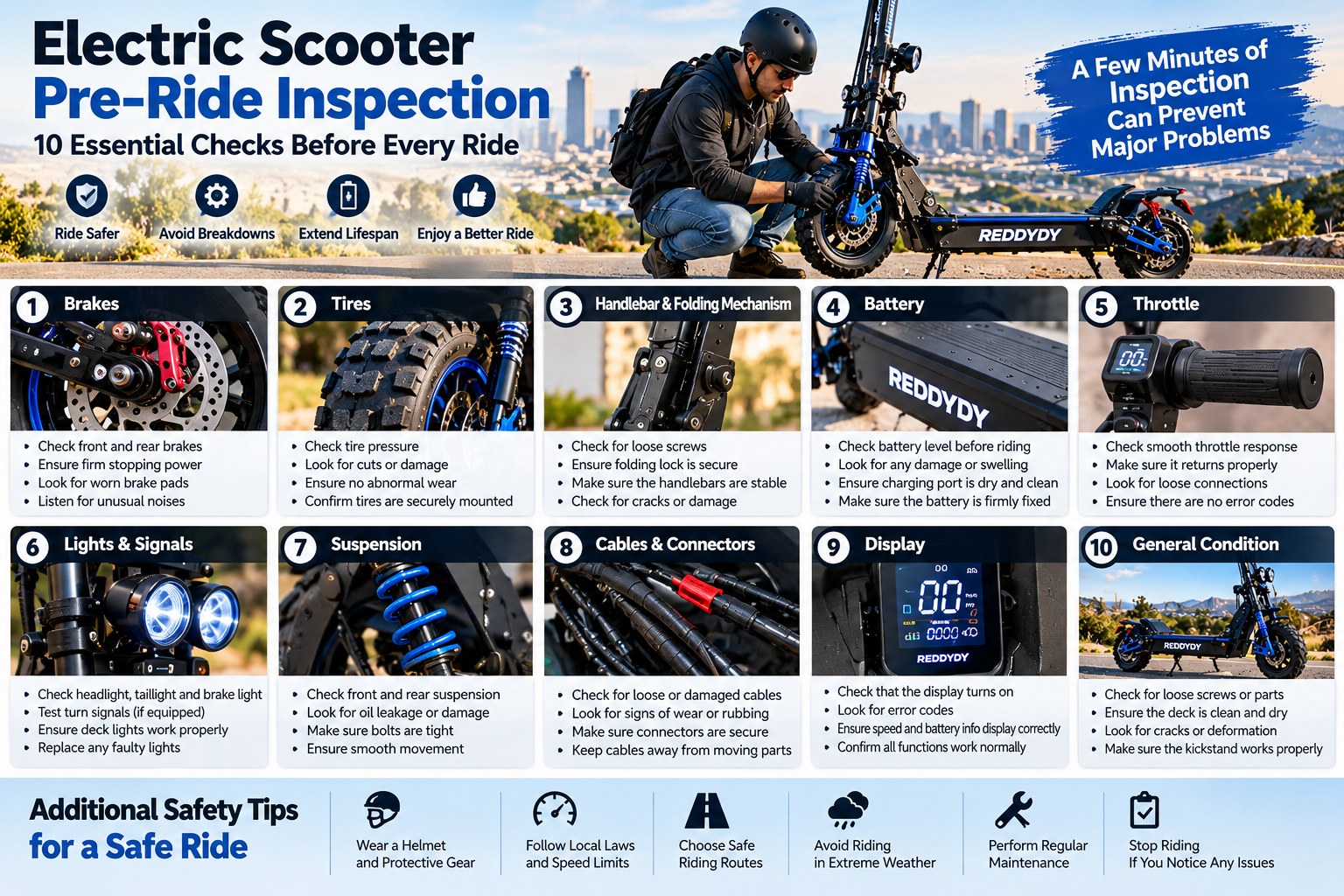
1. Brakes
Roll the scooter slowly by hand and test both brakes separately. Look for weak braking, unusual rubbing, fluid leaks, or worn pads. Do not ride if a brake sticks or fails.
2. Tires
Check both tires for cuts, embedded objects, or uneven wear. Measure pressure with a gauge and use the value specified for your model and tire—not a generic PSI recommendation.
3. Handlebars and Folding Lock
Make sure the handlebars, stem, and folding latch are secure. Check for cracks, play, or loose joints. Never ride with an incompletely locked folding mechanism.
4. Battery and Charging Port
Check the charge level and look for swelling, moisture, overheating, damage, or an unusual smell. Never open a battery pack or charge a battery that appears damaged.
5. Throttle
With the scooter off, confirm the throttle moves freely and returns normally. If acceleration is unpredictable or the throttle sticks, stop using the scooter.
6. Lights and Signals
Check the headlight, rear light, brake light, and turn signals if equipped. Decorative deck lighting may not satisfy local visibility requirements.
7. Suspension
Look for cracks, leaking fluid, loose mounts, or unusual movement in the front and rear suspension. Have suspicious noises or visible damage inspected.
8. Cables and Fasteners
Inspect visible wiring for pinching, rubbing, and broken insulation. Look for missing or loose bolts; critical fasteners require model-specific service specifications.
9. Display and Controls
Confirm the display powers on normally, the battery indication is reasonable, and no unexplained error codes appear. Verify the riding mode before moving.
10. Frame and Deck
Look for cracks, bent parts, loose accessories, and anything that could interfere with the wheels or steering. Check that the deck is clean and provides good grip.
When to stop riding
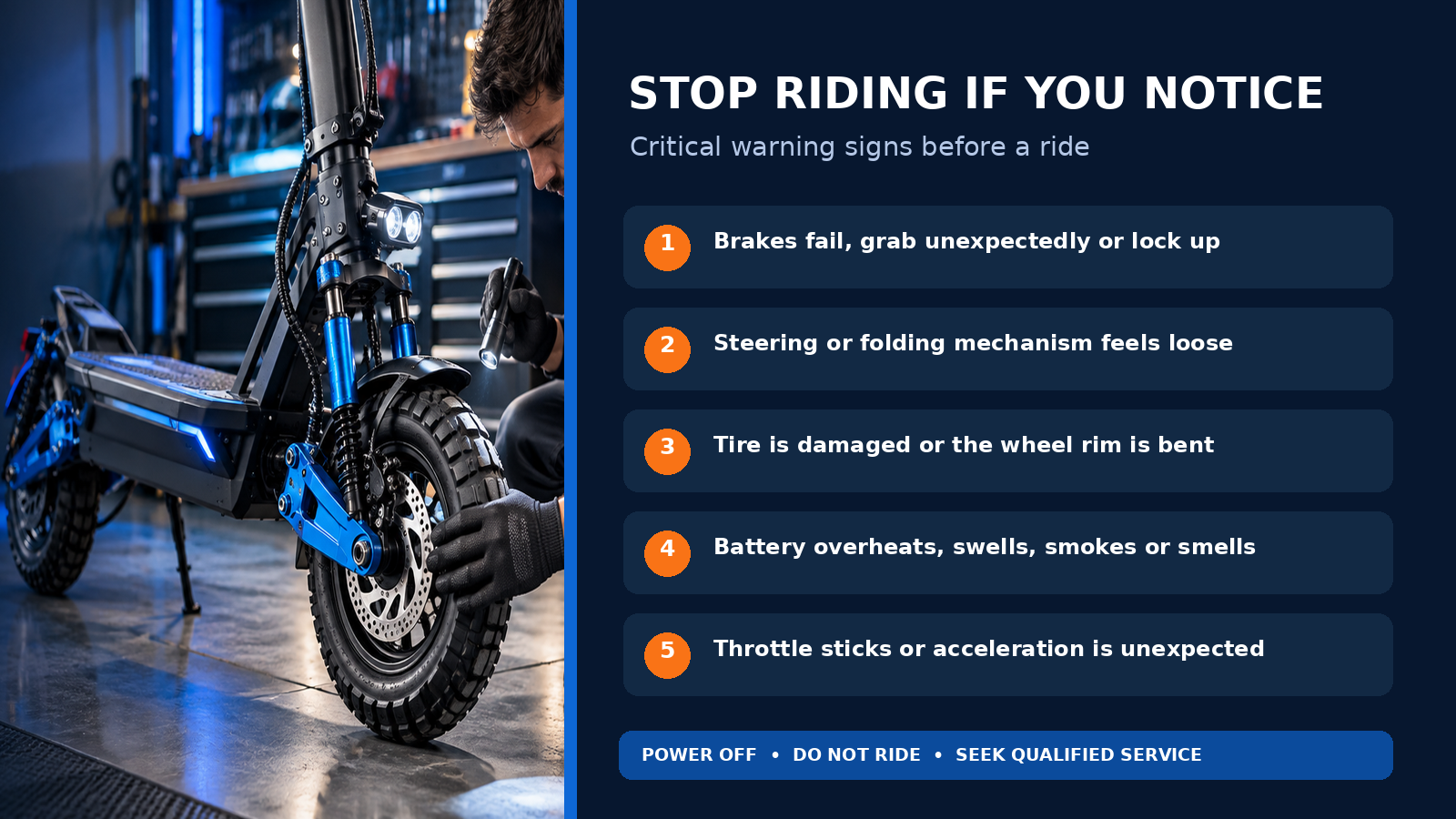
Wear a properly fitted helmet, review the weather and local riding rules, and choose a safe, permitted route. A short inspection is a simple habit that helps protect both you and your scooter.
Frequently asked questions
How often should I inspect my electric scooter?
Do a quick check before every ride, plus a detailed inspection after a crash, hard impact, water exposure, or long storage.
What if my scooter shows an error code?
Check your model manual and contact support. Do not ride if braking, throttle response, or power delivery is unreliable.
Learn more: CPSC Micromobility Safety · Explore REDDYDY scooters